
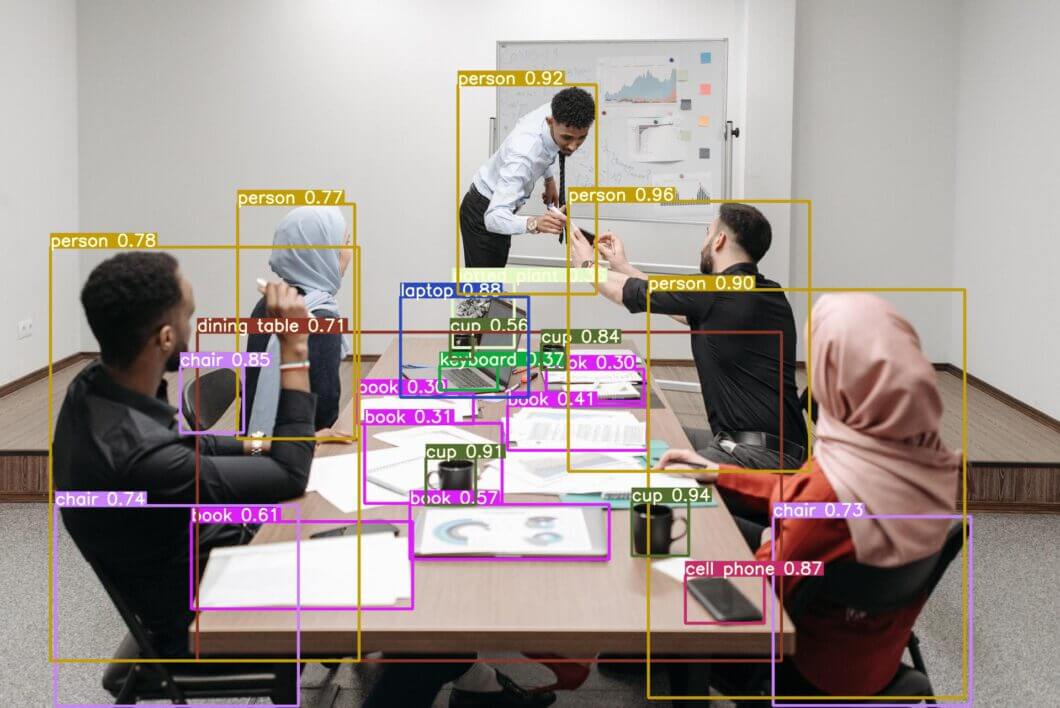

Modern technology is not complete without image detectors. They allow us to quickly and intelligently interact with technologies such as facial recognition for unlocking phones or autonomous vehicles that detect pedestrians. What are the current image detectors? How accurate are they and what factors influence their accuracy? This guide simplifies the topic.
What Is an Image Detector?
Image detectors are artificial intelligence algorithms that interpret visual input such as photos or videos to interpret what’s there. An image detector doesn’t just see pixels; rather it analyzes patterns, shapes, and textures to understand what exists within an image.
Some common uses include:
- Identifying objects (cars, cats, food, etc.)
- Detecting faces, emotions, and gestures
- Reading text from images through OCR (Optical Character Recognition)
- Classifying medical scans
- Supporting autonomous navigation systems
How Does Image Detection Work?
Image detectors of today employ machine learning and deep learning, employing neural networks that mimic those found within our brains. Below are steps that outline everything from pixels to predictions.
1. Image Input and Processing
When the system receives a raw image, the processing begins. Raw images are far too complex to be analyzed immediately.
Detectors perform preprocessing, which can include:
- Resizing the image
- Normalizing color and lighting
- Reducing noise
- Converting the image into numerical data
This ensures every image is in a consistent format that the model can analyze.
2. Feature Extraction
CNNs (Convolutional Neural Networks) now make it easier to detect images than ever by automating feature extraction, such as edges, corners or texture patterns. Older image detection systems used manually created features to detect images; CNNs now automate this feature extraction.
CNNs analyze patterns layer by layer:
- Early layers detect simple shapes like edges
- Middle layers identify textures or combined shapes
- Deep layers recognize complex objects such as faces and animals
This layered approach allows the network to understand visual data with increasing precision.
3. Object Classification or Detection
Modern detectors can perform several of these functions for us:
Image Classification
Determines the single most probable object (e.g., “This is a puppy”).
Object Detection
Locates multiple objects and draws bounding boxes around them (for instance recognizing multiple people, bicycles and traffic lights within one picture).
Popular detection models include:
- YOLO (You Only Look Once)
- Faster R-CNN
- SSD (Single Shot MultiBox Detector)
These models are fast, accurate, and widely used in real-world applications.
4. Post-Processing the Results
Post-processing is the final step in improving predictions. This may include:
- Removing duplicate detections
- Filtering out low-confidence predictions
- Refining the placement of bounding boxes
This approach helps create an accurate interpretation of an image.
Why Are Modern Image Detectors So Accurate?
Accuracy can be enhanced by taking into account multiple factors:
Deep Learning
Neural networks learn from millions of images, recognizing patterns that cannot be programmed by humans directly.
Large Datasets
ImageNet, COCO, and other datasets contain thousands of labeled image categories.
Advanced Hardware
GPUs and TPUs allow models to analyze millions of calculations per second.
Continuous Model Training
Modern detectors improve every year thanks to better algorithms and larger image libraries.
Popular Applications of Image Detection Today
Image detection powers many technologies, such as:
- Facial recognition for unlocking devices
- Security surveillance and threat detection
- Medical imaging, such as identifying tumors
- Retail checkout automation
- Self-driving vehicles
- Smart agriculture, like crop health detection
- E-commerce visual search
As AI continues to progress, these systems will become even more accurate.
The Future of Image Detection
Some upcoming trends include:
- Real-time detection on mobile devices
- Multimodal AI combining audio, visuals, and text
- 3D vision and depth sensing
- More ethical and privacy-focused recognition systems
Future projections predict faster, more reliable, and intuitive visual comprehension.
Final Thoughts
Image detectors are revolutionizing our interactions with technology. By employing deep learning, massive datasets and powerful neural networks to interpret images with remarkable accuracy, image detectors have transformed the digital world insecurity systems as well as innovations in healthcare. Image detection continues to shape our world of technology today.
