


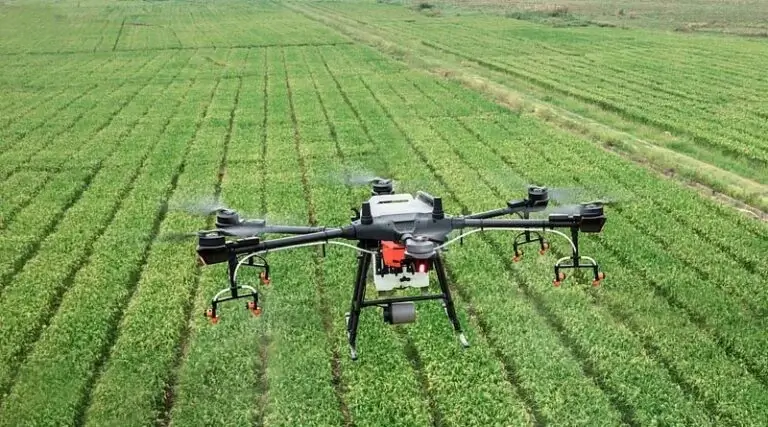
Many small and medium farms in India feel pressure from rising input costs and uncertain yields. You might be reading this because you’re looking for a practical way to reduce chemical use, cut labour time, and spray more accurately without overspending.
The good news is that today, there are affordable agricultural drones and service options that bring measurable savings to field operations while fitting rural budgets. This short guide explains how Farming Drone Price works in India, what drives the cost, and how you can approach buying or hiring a drone service so the money you invest helps your farm earn more.
In this blog, we’ll map the real price bands for sprayer drones, list the main cost drivers, show popular models and their approximate prices, explain subsidy and financing paths, and give a simple checklist to pick the right option for your land.
Understanding The Price Bands For Farming Drones
Drones used for spraying and basic crop monitoring in India are priced across a wide range to match different farm sizes and uses. As a rule of thumb:
- Entry-level or compact drones for small farms and monitoring are on the lower side of the range.
- Mid-range sprayer drones used by independent operators or custom-hire services sit in the middle.
- Heavy-duty professional sprayers for large farms or contractors cost the most.
One recent market summary places many agriculture drones in India between ₹5 lakh and ₹25 lakh, depending on features like payload, flight time, and autonomy.
What Drives The Cost
Understanding the main cost drivers helps you match a model to your needs:
- Tank Capacity and Payload: Larger tanks and heavier payload systems require stronger frames and motors, which in turn increase costs.
- Flight Time and Battery Technology: Longer flight times require either larger batteries or more efficient power systems.
- Number and Type of Nozzles: Precision spraying systems with multiple nozzles and flow control are more expensive.
- Autonomy and Sensors: RTK/RTK-like GPS, RTK-capable modules, and terrain-sensing sensors add to the price.
- Build Quality and After-Sales: Local availability of spares, warranty and support affect the final ownership cost.
- Certification and Training Requirements: Certified systems and trained pilots reduce regulatory friction but add initial expenses.
Popular Models And Typical Price Examples
Here are representative models and public price cues so you can compare what each tier offers:
- IdeaForge / Ninja-class (India-made): listed prices around ₹4.5 lakh for multipurpose units used for inspection and light agricultural work.
- DJI Agras T20 (professional sprayer): Indian retail listings show prices in the vicinity of ₹15 lakh for complete professional kits. This class is built for faster coverage and heavier payloads.
- XAG series (P60 and similar): models targeted at agricultural spraying with 20–30 kg payload capacity; these are designed to cover larger hectares per hour and have advanced autopilot features. Payload specs and design notes are available from manufacturers.
These examples are for orientation. Exact prices change with import duties, dealer margins, firmware bundles, and optional accessories.
Buying Versus Hiring A Drone Service
If you are a rural entrepreneur offering spray services, buying may be worth it. If you are a farmer with a few acres, hiring a local drone service can give you most benefits with lower capital outlay.
Benefits of hiring:
- Lower upfront cost.
- Immediate access to trained pilots and maintenance.
- No worries about registration paperwork and spare parts.
Benefits of buying:
- Higher long-term earning potential if you offer spraying to neighbours.
- Faster scheduling and repeated use during peak season.
- Control over settings, chemical mixes (follow label instructions), and routes.
Government Support, Subsidies, And Finance Options
Multiple government and state-level programmes aim to make drones affordable for farmers and rural service providers. Some schemes offer substantial cost support or subsidised loans for eligible groups such as women’s SHGs, FPOs, and small farmers. One national scheme for women’s self-help groups offered up to 80% subsidy up to a capped amount under targeted pilots.
In contrast, broader agricultural mechanisation subsidy guidelines for farmers and custom hiring centres often mention 40–50% support with different caps in practice. Check the latest scheme rules and local nodal officers for exact eligibility and amounts.
Operating Cost: What You Will Spend After Purchase
Owning a drone is not only about the sticker price. Expect recurring costs such as:
- Batteries and replacements.
- Nozzle and pump servicing.
- Annual maintenance and spare motors.
- Insurance, registration fees and periodic inspections.
- Pilot training and refresher courses.
A conservative way to estimate running cost is to add 12–18% of the purchase price per year for spares, batteries and servicing in early years; real numbers depend on use intensity and local service availability.
Quick Comparison Checklist
- How many hectares do you expect to cover per day?
- What tank or payload capacity do you need for your crops?
- Are spare parts and service available within a day’s travel?
- What local or central subsidies are available for application?
- Will you offer spraying as a paid service to neighbours? If yes, what is a realistic daily or weekly schedule?
- Does the drone vendor provide pilot training and a warranty?
- Is there a local authorised service centre for the brand?
Practical Steps To Buy Or Start A Drone Service
- Talk to two or three local vendors and ask for demonstrations.
- Ask the vendor for a full cost of ownership sheet showing batteries, spares and expected maintenance.
- Check DigitalSky / DGCA registration and licensing steps for the aircraft and pilot. Registration and pilot certification are required in many situations.
- Consider a phased approach: start by hiring a machine for a season, then buy when you have reliable demand and a trained pilot.
Safety, Regulation And Training
You should operate sprayer drones in line with government rules and chemical label instructions. Register the aircraft on the national drone platform, keep the required documentation handy, and fly only within approved areas. Pilot training courses cover flight safety, spray calibration and local rules; trained pilots use less chemical per hectare and lower drift risk.
Pricing Examples For Planning
To help you plan funds, here are rough bands based on market reporting:
- Budget / Entry Tier: Around ₹4–6 lakh; useful for scouting, small payloads and mapping.
- Mid Tier: Around ₹7–12 lakh; standard for rural entrepreneurs who want a balance of payload and affordability.
- High Tier: ₹12–25 lakh and above; designed for heavy spraying, large area coverage, and contractors.
How To Calculate Payback
Basic formula: Annual net benefit = Savings in labour + savings in input use (less pesticide/water) + income from contracted spraying.
Compare this with annualised ownership cost (loan EMI or depreciation + operating cost). For many operators, a well-run spraying service can repay the machine cost within 1–3 seasons if utilisation is steady.
Final Takeaways
If you run a custom-hire business or plan to spray many hectares, a mid- to high-tier drone can be a sound investment. If your landholding is small, hiring a local operator gives the same field benefits at lower risk. Always account for training, local support, and subsidy options before you commit to buy. For current models and a quick market view that helps set expectations on the farm, consult vendor lists and compare demo flights before paying.