


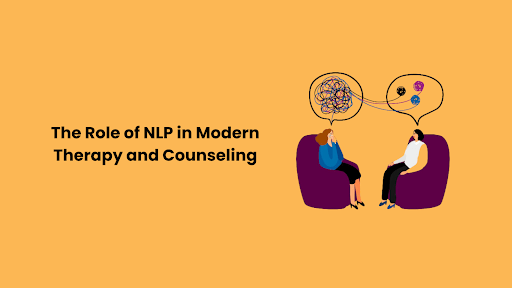
Modern therapy and counselling practice now heavily rely on NLP Training and applying NLP techniques. However, What is NLP, and how is it changing the therapeutic field? We are going to take a deep dive into the tremendous effects of Neuro-Linguistic Programming (NLP) on mental health in this blog. We’ll explore the complexities of NLP training, discover its capacity for transformation, and comprehend the fundamentals of “What is NLP.”
NLP in the Field of Therapy and Counseling
What is NLP?
NLP is a psychological framework that investigates the connections between language, neuroscience, and behaviour. Richard Bandler and John Grinder developed NLP in the 1970s to model successful individuals’ behaviors and thought processes in various fields.
The Power of Communication
NLP techniques provide therapists with the tools to build rapport, establish trust, and create a safe and supportive environment for clients. By finely tuning their verbal and non-verbal communication skills, practitioners of NLP can connect with clients on a deeper level, fostering an atmosphere conducive to healing and growth.
Addressing Psychological Challenges
Therapists trained in NLP can guide clients in reprogramming their thought patterns, helping them release limiting beliefs and replace them with empowering ones. This process can lead to profound and lasting transformations in clients’ lives, enabling them to overcome obstacles that once seemed insurmountable.
Applications of NLP Techniques
NLP approaches give therapists the means to connect with their clients, generate a sense of trust, and provide a secure and encouraging environment. By honing their verbal and nonverbal communication techniques, NLP practitioners can establish a stronger connection with their clients and create a therapeutic and growth-promoting environment.


Building Rapport with Clients
- NLP training enables therapists to establish excellent rapport with their clients.
- Mirroring the client’s communication style, including words, gestures, and breathing patterns, is required.
- Mirroring builds trust, comfort, and a stronger connection with clients, allowing them to open up.
Anchoring Emotional States
- NLP uses triggers, or anchors, to elicit particular emotional reactions.
- Counsellors assist patients in developing anchors that are associated with feelings of confidence or serenity.
- Through self-activation training, clients can gain control over their emotional states.
Rewriting Negative Beliefs
- Self-limiting beliefs and thought patterns are identified and challenged using NLP approaches.
- “Reframing” is an important practice that assists customers in viewing past experiences from various perspectives.
- Replacing self-doubt with self-belief and negativity with optimism promotes self-empowerment and resilience.
Also read: BLOOKET JOIN: Play Blooket With/Without Game Code
Challenges and Criticisms
Some detractors classify NLP as pseudoscience because it lacks a strong scientific foundation. Even though NLP has a substantial following in the therapeutic and personal development sectors, the validity of the empirical data supporting its efficacy is still being debated. It is crucial to acknowledge that NLP has evolved through time and that some of its earlier assumptions and methodologies have been modified or abandoned in response to scientific critique.
The Future of NLP in Therapy and Counseling
- Expanding Accessibility: NLP techniques can be adapted for remote therapy and counselling, increasing access to mental health services, especially in underserved areas.
- Research and Validation: The future will likely see an increase in research efforts to validate NLP’s efficacy, leading to more widespread acceptance and integration into mainstream therapy and counselling.
- Integrating Technology: NLP is poised to leverage technological advancements, including virtual reality and AI-driven chatbots, to enhance therapy accessibility and effectiveness.
- Evolving Therapeutic Practices: As NLP continues to evolve, it may reshape traditional therapeutic approaches, offering more efficient and tailored solutions to address diverse mental health challenges.
The Ethical Considerations
Clients must understand everything there is to know about NLP and the precise methods that will be used in their sessions. This openness guarantees that patients are comfortable with the techniques being employed and empowers them to make educated decisions about their care. Therapists need to uphold professional and clear boundaries because NLP may be an intimate and emotionally charged therapy.
Conclusion
The application of NLP in counselling and therapy is nothing short of revolutionary. It equips counsellors and therapists with a flexible toolset of techniques that include rewriting negative beliefs, establishing rapport, and anchoring emotional states. NLP has assisted people in overcoming fears, recovering from trauma, and improving their self-esteem using these strategies.